
Inlet
Waste water from a car park, garage, car wash or kitchen enters the first chamber.
With your consent we measure visits with Google Analytics, which sets cookies and may transfer data to the USA. Until you click "Accept", the site sends nothing to Google. Privacy policy
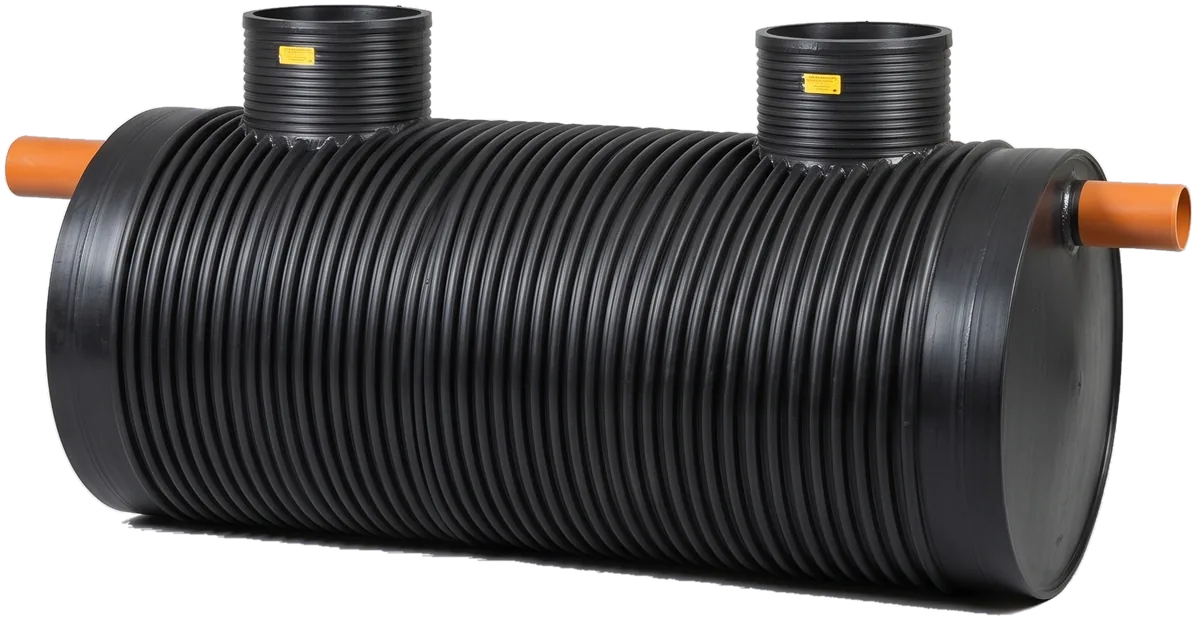
A polyethylene oil separator takes oil, grease and other light liquids out of waste water before it reaches the sewer, at petrol stations, garages, car washes, car parks and kitchens. Sizes cover 2 to 250 litres per second. We make vertical and horizontal models from high-density polyethylene (HDPE) in Osečina, Serbia, where we have made HDPE tanks since 2001.
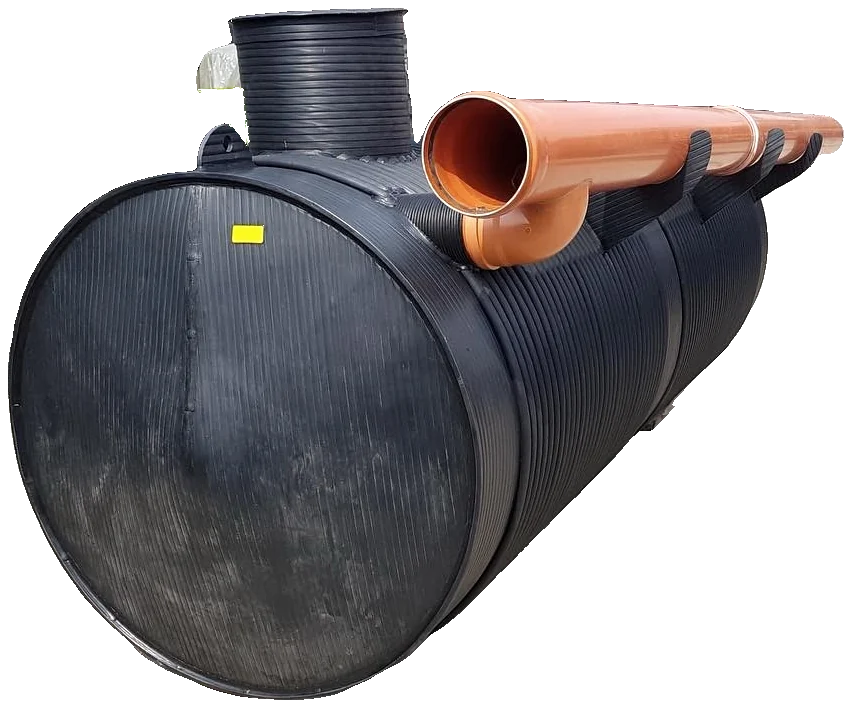 Illustration
A separator, called an oil interceptor in the UK, is chosen by its flow rate: how many litres of water pass through it each second. We calculate the flow rate for your paved area, garage or car park.
Flow rates are in litres per second (l/s).
| Type | Flow rate (l/s) | Volume (m³) | Diameter × length (mm) | Inlet and outlet (mm) |
|---|---|---|---|---|
| SEP-2 | 2 | 1 | 1,000 × 1,200 | Ø125 |
| SEP-5 | 5 | 2 | 1,000 × 2,500 | Ø125 |
| SEP-10 | 10 | 3 | 1,200 × 2,600 | Ø160 |
| SEP-15 | 15 | 5 | 1,500 × 2,800 | Ø200 |
| SEP-20 | 20 | 8 | 1,500 × 4,450 | Ø200 |
| SEP-30 | 30 | 12 | 1,800 × 4,600 | Ø250 |
| SEP-40 | 40 | 13.5 | 1,800 × 4,500 | Ø250 |
| SEP-50 | 50 | 15 | 2,000 × 4,700 | Ø300 |
| SEP-65 | 65 | 18.5 | 2,000 × 6,000 | Ø300 |
| SEP-80 | 80 | 20 | 2,000 × 6,300 | Ø300 |
| SEP-100 | 100 | 30 | 2,500 × 6,000 | Ø400 |
| SEP-150 | 150 | 36 | 2,500 × 7,300 | Ø500 |
| SEP-200 | 200 | 40 | 2,500 × 8,000 | Ø600 |
| SEP-250 | 250 | 50 | 2,500 × 10,000 | Ø600 |
 1Lids
1
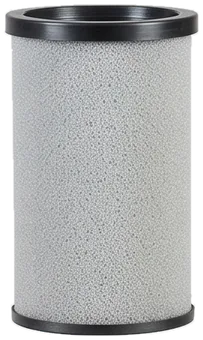
2Coalescing filter
3Separator body
Scroll and the filter comes out of the separator
This picture is an illustration and is not entirely accurate.
This picture is an illustration meant to explain the product as clearly as possible and is not entirely accurate. For exact dimensions and all details, call us: +381 63 215 069. We will prepare a technical drawing to your requirements.
Water flows through the separator from left to right. Tap or click a number on the picture.
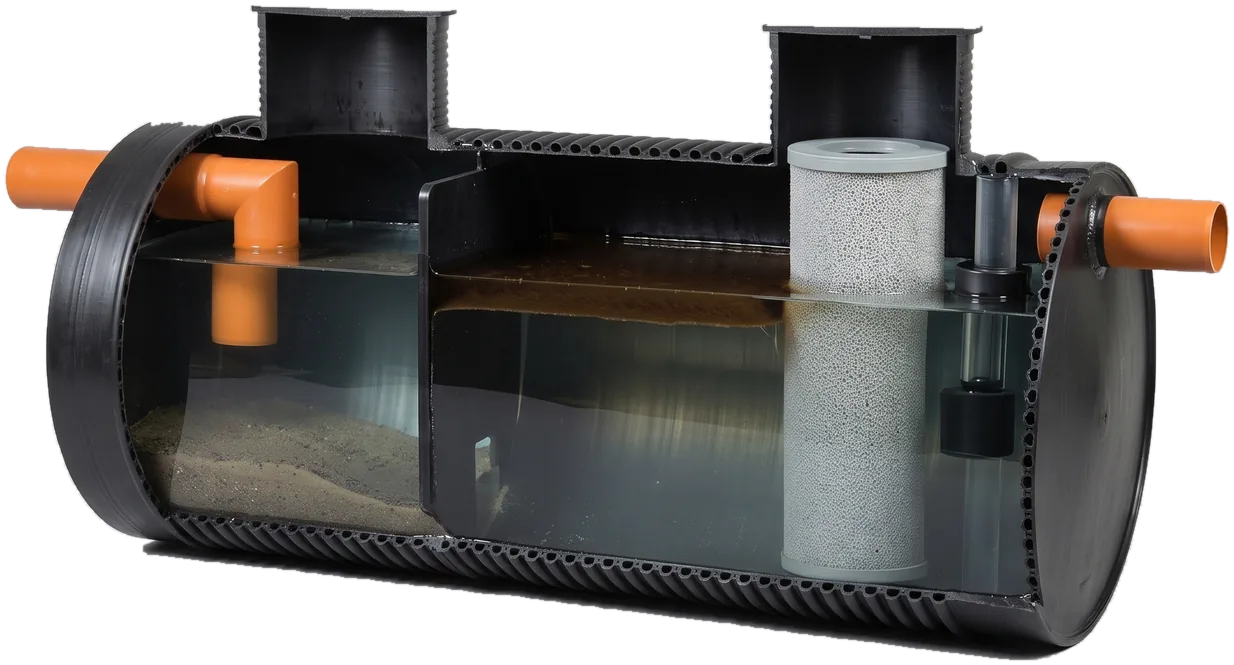
This picture is an illustration meant to explain the product as clearly as possible and is not entirely accurate. For exact dimensions and all details, call us: +381 63 215 069. We will prepare a technical drawing to your requirements.
Waste water from a car park, garage, car wash or kitchen enters the first chamber.
Sand, sludge and heavier particles sink to the bottom and stay in the first chamber, so they do not clog the rest of the separator.
Oil and grease are lighter than water. They rise and stay on the surface as a layer, which is pumped out from time to time.
The filter is a honeycomb block of polypropylene. In its pores the finest oil droplets join into larger ones and rise, so the separator also catches oil that gets past the silt trap.
Water with the oil removed goes to the sewer or on to further treatment.
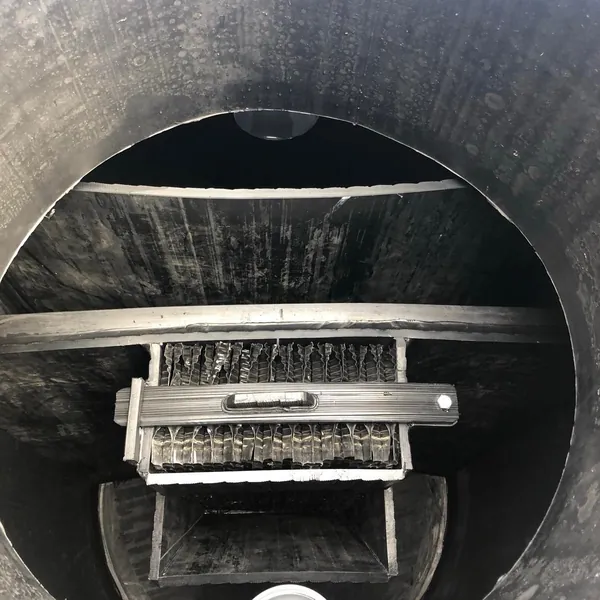
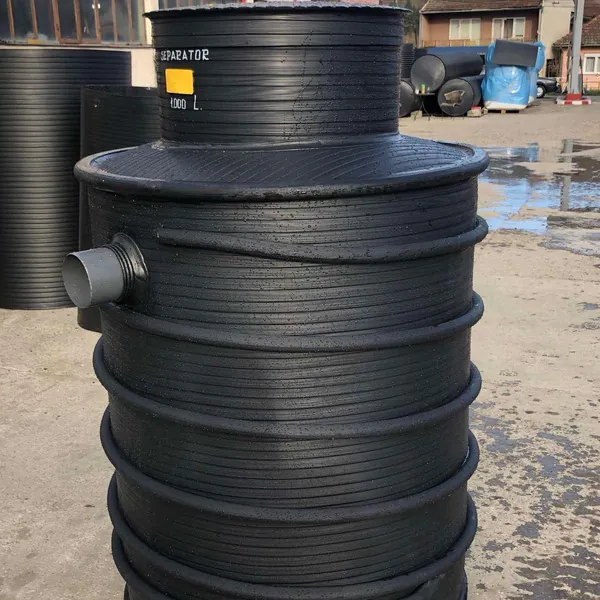
Photos from our plant. Two examples from our drawings: a vertical separator of about 1,000 litres, 1,000 mm in diameter, and a horizontal one of 15,000 litres with a coalescing filter and two inspection openings, 2,400 mm in diameter and 3,950 mm long.
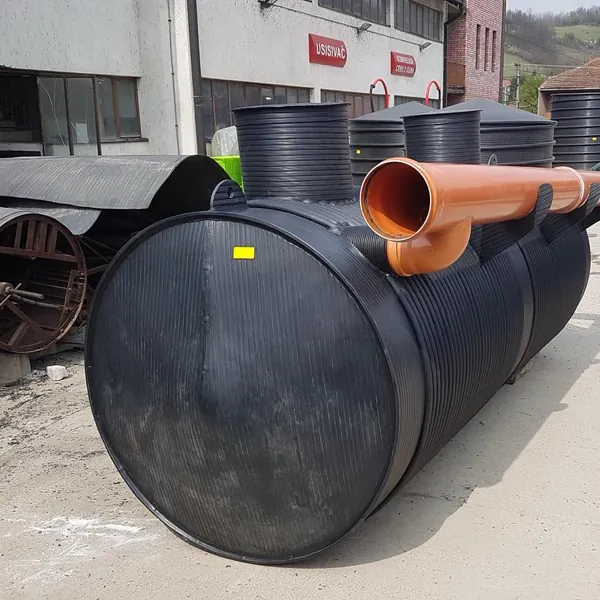
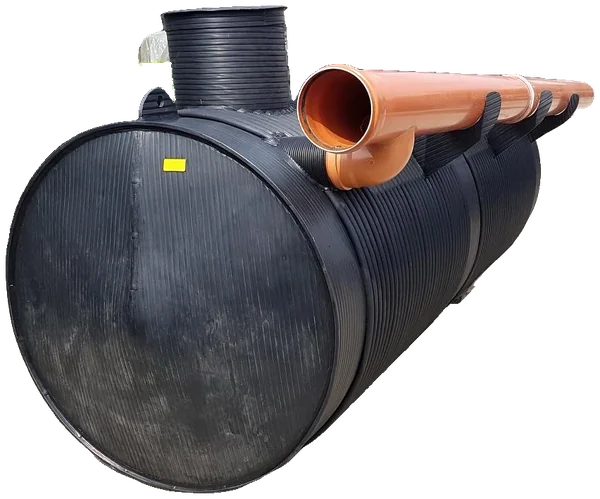
For places where oil is discharged regularly.
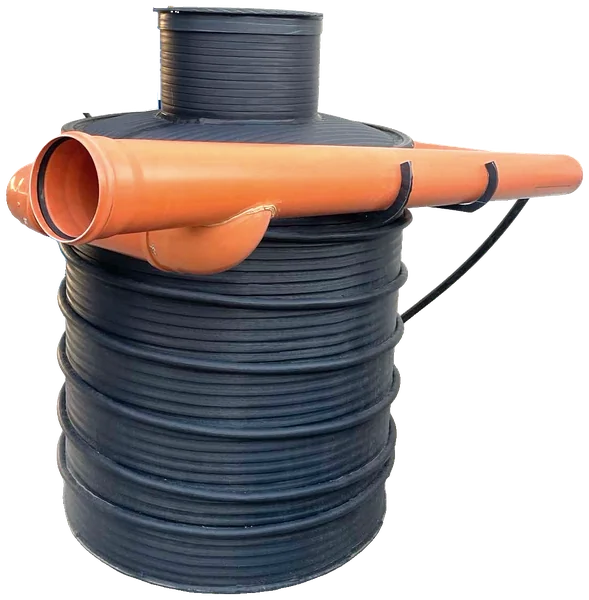
For car parks and roads, where the risk is low.
| Feature | What it changes | What you get |
|---|---|---|
| Holds back kitchen grease | The grease does not stick to pipe walls or block the sewer. | It deals with blocked drain pipes and unpleasant smells. |
| Coalescing filter | It also catches oil droplets that are too fine to rise on their own. | The separator has the part that SRPS EN 858 lists as required. |
| Holds back oil and petroleum products | A company that discharges oily waste water must keep the oil out of surface waters. | The oil stays in the separator instead of leaving with the water. |
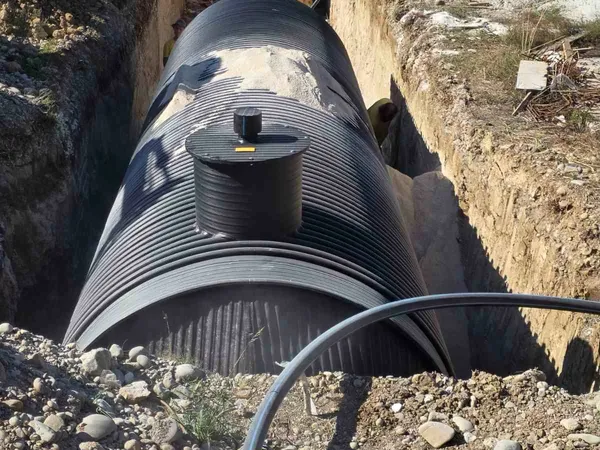
The tank is lowered onto a sand bed 200 mm thick and backfilled with sand evenly on all sides. Another 200 mm of sand goes over the top. Questions about installation: +381 63 215 069 or office@vozdkomerc.rs.
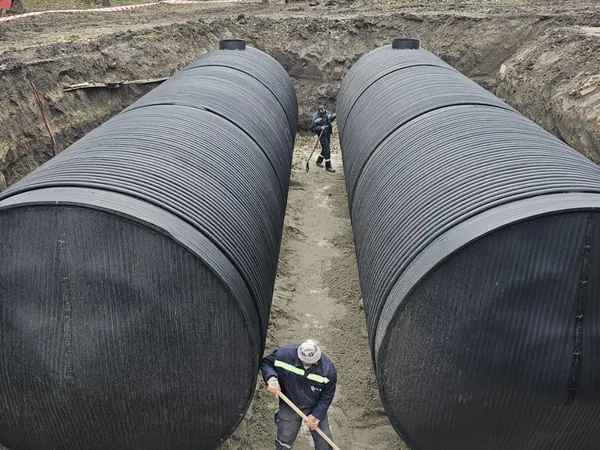
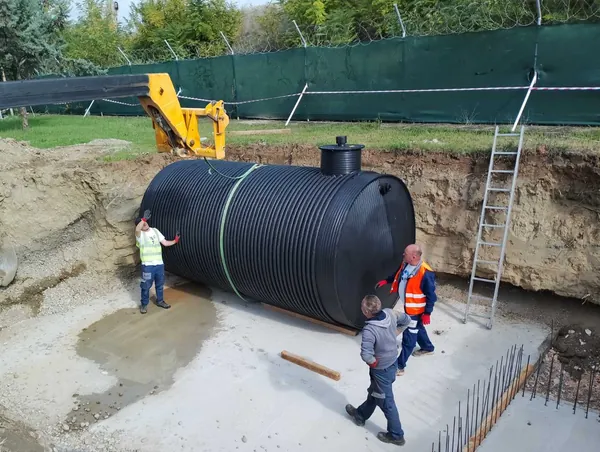
The price depends on the flow rate, which depends on the area and where the water comes from. We make 14 sizes, from SEP-2 for 2 l/s to SEP-250 for 250 l/s, so one price list would not be accurate. For an offer, call +381 63 215 069 or email office@vozdkomerc.rs with the area and its use.
A restaurant needs a separator that holds back vegetable and animal fats before they stick to the pipes and block the drain. Our smallest model, SEP-2, holds 1 m³ and is buried, so it does not fit under a sink. We size it by the water flow from the kitchen. Call +381 63 215 069 or email office@vozdkomerc.rs.
A separator with a coalescing filter that the whole flow passes through. At petrol stations, garages, car repair shops and car washes, oil and sludge get into the drains regularly. We choose the shape, vertical or horizontal, to suit the space, and the size by the paved area. Call +381 63 215 069 or email office@vozdkomerc.rs.
A coalescing filter is a honeycomb block of polypropylene. Oil droplets too fine to rise on their own cling to the walls of its pores, join into larger drops and rise. Under SRPS EN 858 the filter is a required part of separators for oil, grease and petroleum products. It lifts out through the inspection opening for cleaning.
A bypass separator is for car parks and roads, where the risk is low. It is designed to treat the first 10% of the water that runs off the surface, because the first flush is usually the most polluted. Above the design flow, excess rainwater bypasses the second chamber and leaves, so the separator is not overloaded.
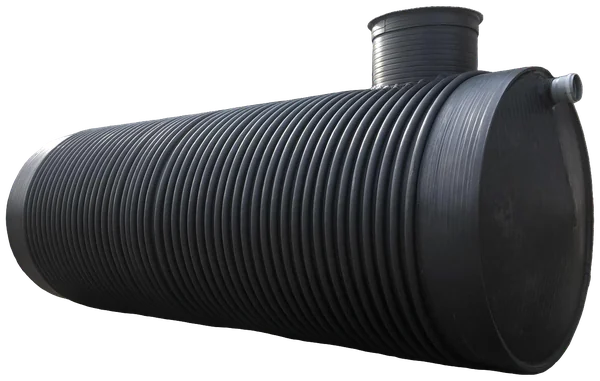
Two- and three-chamber, ready to install.
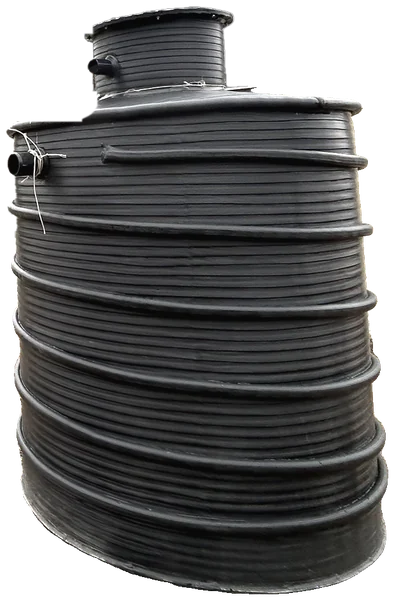
Biological treatment, KLARO SBR system, up to 500 people.
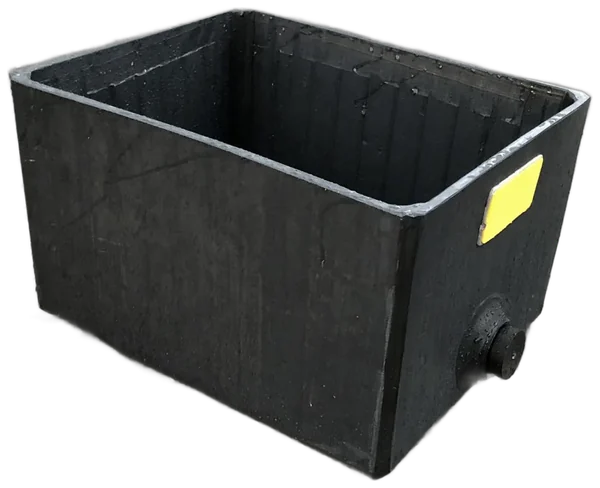
For drums, plus rectangular tanks.
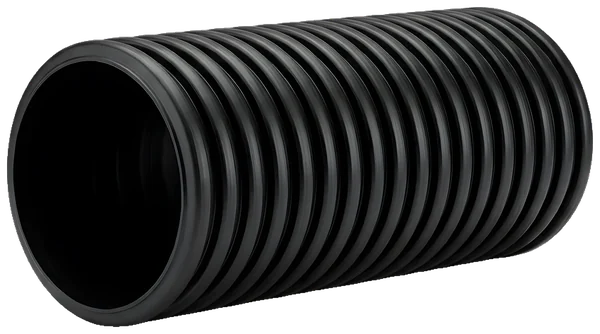 Illustration
Spiral wound, from Ø400 to Ø1200 mm.
This picture is an illustration and is not entirely accurate.
Vožd Komerc is a family company in business since 1993. Since 2001 we have made plastic vats and high-density polyethylene tanks in our own 2,500 m² hall, with 25 workers.
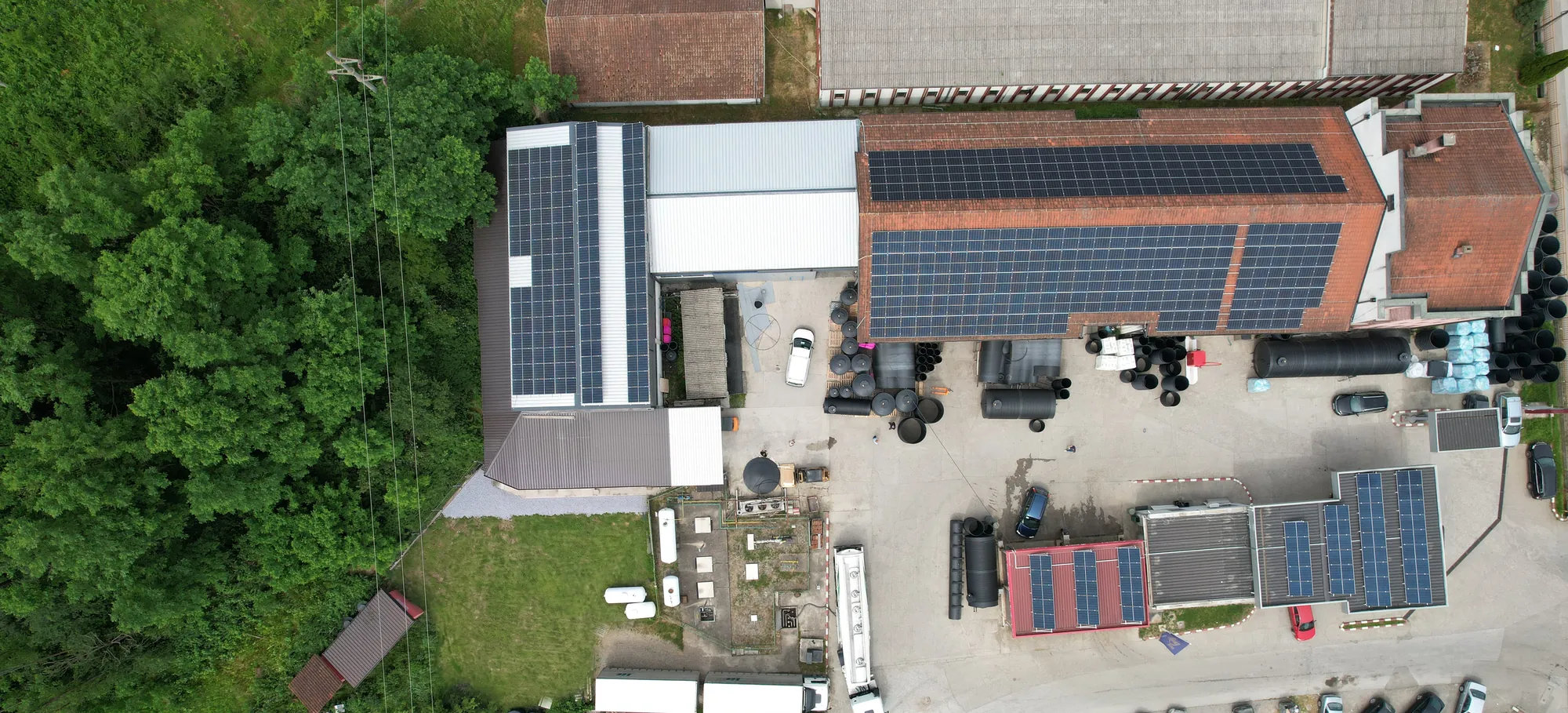
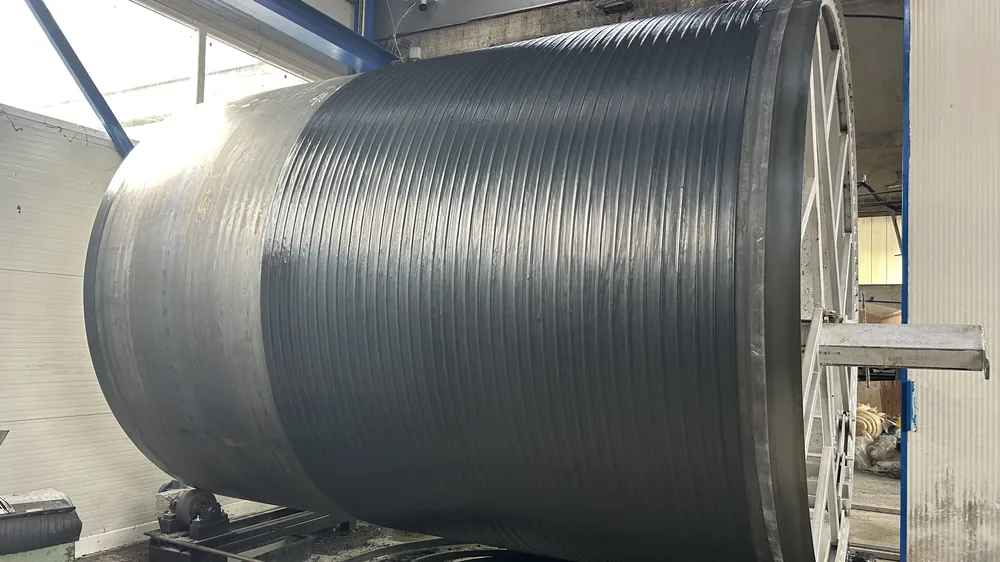
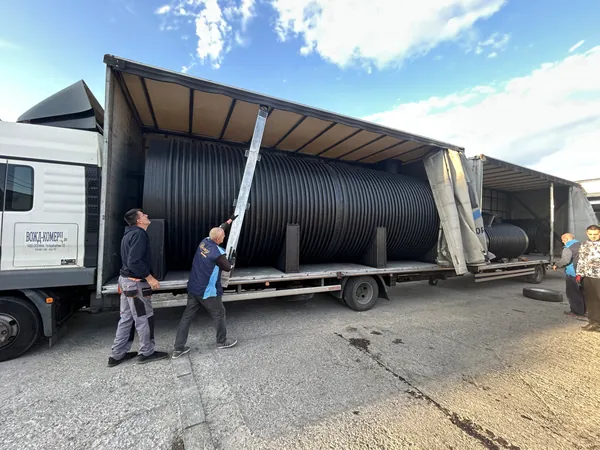
Authorised institutions check our production quality, our material and our welding.
 SRPS ISO 9001:2015Quality management in the production and sale of plastic products. Valid until May 2028.
 Health safety test report for the materialFor the HDPE sheets we make our tanks from. Zavod za javno zdravlje Valjevo (public health institute), 2026.
 Every welder certifiedPlastic welding to SRPS EN 13067. Zavod za zavarivanje (welding institute), Belgrade.
Also: KAIZEN, a system of continuous improvement, and a permit for transport in Serbia and abroad.